Friday, June 18, 2010
Monday, November 17, 2008
HIATUS
 I will be taking an indefinite break from writing, resuming at some point in the future. I want to thank all of my readers and commen-tators for their loyalty. It has been a grand experience and I wish you all God's blessings, peace and happiness.
Pax et bonum,
Kurt Poterack

Friday, November 14, 2008
J.S. Bach (Part V)
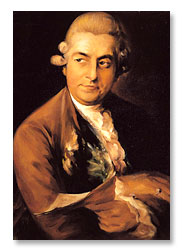 J.S. Bach
(excerpts from the book, Bach, Beethoven and the Boys by David Barber)
Bach's possessions included six claviers, a lute and several other instruments; a variety of candlesticks; two silver coffee pots, one large, one small; a silver teapot; and assorted pieces of furniture. He also had three different coats (the silk one was somewhat worn, he says) and 11 linen shirts "at the wash." He probably picked them up before he left town.
At the St. Thomas School, Bach was expected to teach the boys music, Latin, and grammar, while leading "a sober and secluded life." He hired a man named Petzoldt to teach his Latin classes for him.
[Ed. note: Bach wasn't the first choice of the Leipzig town authorities for the job. Telemann was their first choice, because he was a graduate of the school and his music was more "modern." The second choice was one Christoph Graupner, also a graduate of the St. Thomas School. (Ever heard of him?) Both men were competent, but neither could obtain release from their current posts. It says something about the state of affairs at that time. What existed were the remnants of the old Medieval guild system - there definitely were publicly recognized musical standards. However this was combined with an interesting form of graft: 1) marry my daughter, or 2) make a "contribution," or 3) be a part of the old boys network, etc. They didn't fully realize what they had in Bach.]
Bach was busy at Leipzig. When not disciplining small boys he found the time to compose nearly 300 cantatas, the B minor Mass, and his mighty St. Matthew Passion. In his spare moments he composed other things. His old temper hadn't left him: when the university officials turned down Bach's application to compose a special piece of music and gave the job instead to a man named Gorner, Bach tossed his wig at him and said he would have made a better cobbler. Bach's salary at the school was 700 thaler a year, with extra money to lead the choir for funerals.
The school's old rector died, and was replaced by Johann August Ernesti. He was one of those progressive types who didn't care for music much. He used to call the boys in the school orchestra "pot-house fiddlers," which was bad for morale. [Ed. note: I also read that he called them "beer fiddlers."] Bach spent more and more time travelling around the country-side trying out new organs, as an excuse to get away.
In his last years, Bach was nearly blind and his health was declining. It was all he could do to jot down the first 239 bars of the last fugue of The Art of Fugue, the most amazingly complicated fugal composition ever written. An English oculist, John Taylor, attempted surgery on Bach's eyes but it did no good: the operation left him completely blind [Ed. note: the same oculist operated on Handel, I believe, with the same effect. He traveled around with all of his equipment and assistants in several covered wagons with big eyes painted on them - pretty creepy!] Suddenly on July 18, 1750, Bach's eyesight was miraculously restored, but he suffered a stroke and died 10 days later.
Anna Magdalena never remarried and tried to struggle along on a measly pension. She died ten years after her husband and was buried in a pauper's grave. Wilhelm Friedemann did pretty well as a composer and recitalist. One source tells us that "he had a beautifully shaped long-fingered hand." Carl Philip Emanuel worked for Frederick the Great, King of Prussia. Frederick liked to play the flute, but took liberties with the tempo. C.P.E. just played along and said nothing. After all, Frederick was the king. Johann Christian moved to London and wrote operas. [Ed. note: However before this he spent considerable time in Italy and converted to Catholicism - an effect Italy tends to have on some people. He studied with Mozart's counterpoint teacher, Padre Martini, and met and befriended the young Mozart.]
J.C. Bach is pictured above.
There were other Bachs but none of them amounted to much. Bach's grandson, Johann Sebastian II, was a painter, but you can't get ahead that way. By May of 1871, historian Sanford Terry says, "Bach's blood had ceased to flow in mortal veins."
Thursday, November 13, 2008
J.S. Bach (Part IV)
 J.S. Bach
(excerpts from the book, Bach, Beethoven and the Boys by David Barber)
Bach spent nearly 10 years at Weimar, but then found it was time to move on. The old duke was having a family quarrel with his nephew and Bach was caught in the middle. So he accepted a job at the court of Prince Leopold of Anhalt - Cothen. Bach didn't leave on the best of terms. He spent nearly a month in jail "for too obstinately requesting his dismissal." While he was under arrest he composed 46 chorale preludes, so the time wasn't completely wasted.
At Cothen, Bach had a 17-piece orchestra, which kept him busily composing. The court bookbinders finally had to ask him to slow down so they could catch up. He composed little instruction books for his son Wilhelm Friedemann, too.
Bach tried out for an organist job at the Jacobkirche in Hamburg and although he dazzled the judges with his playing, they wouldn't give him the job unless he made a hefty "donation" to the church. Bach refused and the job went to a second-rate organist named Johann Joachim Heitmann, who just happened to have a spare 4,000 marks in his pockets.
Later, Bach composed a set of six concertos that he sent as a gift to Christian Ludwig, The Margrave of Brandenburg. Bach copied out the score very neatly, tied it up with a nice ribbon and sent it off to him. The margrave thanked him very much but probably never opened the package. He didn't have an orchestra, so it didn't do him much good to have the music. Well, it's the thought that counts.
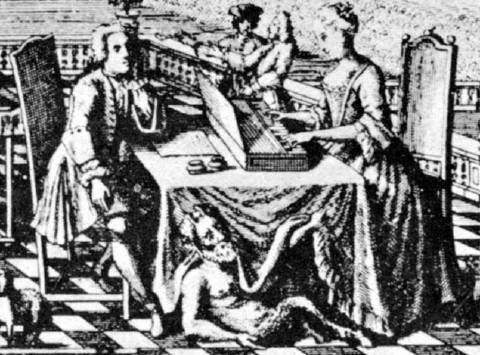
After Maria Barbara died, Bach married again, this time to Anna Magdalena Wulcken, who at 20 was 16 years younger than he was. She was a very good singer and a good copyist besides. [Ed. note: There had been no pictorial evidence of Anna Magdalena, until Teri Noel Towe in a 2001 lecture at Queen's College put forward some interesting arguments that a couple in a 1736 engraving of citizens of Leipzig may indeed be Johann and Anna Magdalena Bach. If this is true, one can see in the relevant portion of the engraving posted above that Anna Magdalena was pretty and, seemingly, taller (!) than her husband. She vaguely reminds me of a certain choir alumna, but that may just be me.]
Bach's patron, Prince Leopold, got married at about this time, too, but he didn't do as well. His wife was his cousin the princess of Anhalt-Bernberg and she thought music was a waste of time. She liked to do needlework, but it's not the same somehow.
So in 1723, Bach and his new wife packed up all their possessions and the kiddies (there were seven by this time, four boys and three girls) and moved to Leipzig, where Bach was appointed cantor and music director of the Thomasschule.
(to be continued)
Wednesday, November 12, 2008
J.S. Bach (Part III)
 J.S. Bach
(excerpts from the book, Bach, Beethoven and the Boys by David Barber)
All the years of practice, not to mention the walking tours, had made Bach into a terrific organist Once when playing a concert at the royal court of Cassel, he played an elaborate pedal solo so well that the crown prince took a ring off his finger and presented it to Bach. As one observer put it: "If the skill of his feet alone earned him such a gift, what might the Prince have given him had he used his hands as well?"
But through it all Bach remained the same humble man he'd always been. When someone complimented him on his playing, he once said: "There's nothing to it. You have to hit the right notes at the right time and the instrument plays itself." That's easy for him to say.
Along about this time, Bach became friends with Johann Gottfried Walther, an organist and lexicographer. He also won a public clavier-playing contest against the great French keyboard player Louis Marchand, who failed to show up. On the day of the contest, Marchand suddenly remembered he had important business out of town, You know how it is. (Ed. note: I believe that the same thing happened with a keyboard challenger to the young Beethoven. He heard Beethoven practicing the night before the competition and then skipped town.)
Tuesday, November 11, 2008
J.S. Bach (Part II)
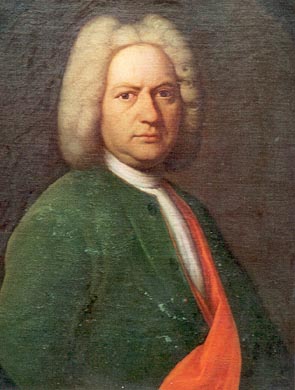 J.S. Bach
(excerpts from the book, Bach, Beethoven and the Boys by David Barber)
Having studied hard and soaked up everything, it was time for Bach to get a real job. His first position was as organist and choirmaster of the little church of St. Bonifacius in Arnstadt. The choir members, all boys, weren't very good singers and were very rowdy. The young Bach had trouble keeping them in line. His bullish temper didn't help matters. He once got into a street brawl with one of his choristers, a boy named Geyersbach, who called Bach a "dirty dog." (Bach had earlier called him a Zippelfagottist, or "nanny-goat bassoonist.")
[Ed. note: In the course of the fight, according to one source, Bach drew his sword and tore Geyersbach's clothes to shreds.]
A little later, Bach asked permission from his employers to go to Lubeck to hear the great Danish organist Dietrich Buxtehude. They weren't terribly keen on the idea, but they gave him four weeks off anyway. Bach set out, again on foot. It was more than 200 miles, but he made it somehow.
Bach had a wonderful time in Lubeck and was thrilled to bits by Buxtehude's playing. Since Buxtehude was thinking of retiring, he offered his job to Bach. The only catch was that Bach had to marry Buxtehude's daughter Anna Margreta. This seemed perfectly reasonable to Buxtehude, since he had done exactly the same thing to get the job from his predecessor, Franz Tunder. Bach, however, was not so thrilled by the offer. He said thanks but no thanks. Two other great musicians of the time -- Johann Matheson and Georg Frideric Handel -- also turned down the offer of the job complete with wife. It wasn't the sort of fringe benefit they had in mind. [Ed. note: OK, I'm sure you're all curious now. The position was eventually filled by one Johann Christian Schieferdecker who, taking the whole deal, acquired a new Frau Schieferdecker. Let's hope the Schieferdeckers were happy. No historical evidence one way or the other survives - which may be a good sign.]
Bach wasn't keen on Buxehude's daughter because he'd had his eye on someone closer to home. Very close to home, in fact. Her name was Maria Barbara Bach and she was his second cousin on his father's side. She was an orphan, living with her aunt and uncle in a little house called "The Golden Crown." Bach lived there for a while too, and that's how they met. It was convenient, anyway. She was cute as a button and had a lovely soprano voice. Pretty soon the church authorities noticed that the two of them were spending a lot of time alone together up in the choir loft. They truly were only practicing, but, well, it was kind of like Christendom College. People liked to speculate.
And they were right.
[Ed. note: Interesting difference between Palestrina and Bach in their choice of spouses. Both of them married a second time after the first wife died. Both of Bach's wives were, at least, amateur musicians - women who would have had a respect and, even, technical appreciation for what he was about. Palestrina, at least according to the superficial evidence in both cases, seems to have had business considerations as an important factor. The first wife had an inheritance, the second owned a fur business. I don't know if either of his wives knew anything about art or music. The marriages seem to have been happy enough, though. While I greatly admire Palestrina's music, I don't know if I could have made the personal choices he did. Perhaps, putting the two together, the ideal wife is a soprano who owns a fur business! ]
So all things considered, Bach decided it might be a good idea to move somewhere else. He and Maria Barabara got married and moved to Muhlhausen and a new church job. Bach's salary in Muhlhausen was 85 gulden a year and "3 measures of corn, 2 trusses of wood, one of beech, one of oak or aspen, and 6 trusses of faggots, delivered at his door, in lieu of arable."
When the young couple were married, they were helped along financially by an inheritance from Tobias Lammerhirt, Bach's uncle on his mother's side. Fourteen years later, in 1721, when Maria Barbara had died and Bach was about to be married again, he got an inheritance from the widow of Tobias Lammerhirt. (It was a good thing Bach did not marry a third time. He was running out of Lammerhirts.)
Things didn't work out well in Muhlhausen. The church authorities were a sour-faced old bunch who didn't believe in having any fun. Within a year, Bach had accepted a job as court organist to Wilhelm Ernst, "His Ducal and Serene Highness of Saxe-Weimar." The duke offered Bach double his previous salary and Bach said, "When do I begin?"
The duke was a kind man, if somewhat stern. Everybody had to turn out all the lights by 8 pm (9 pm in the summer), and the duke had a habit of asking the servants at random about the subject of the chaplain's sermons. He wanted to make sure they'd been awake. The duke liked music and the organ at Weimar was a good one, but the first things Bach did was to install a set of chimes. Then it was even better.
(to be continued)
Monday, November 10, 2008
Concert - Wednesday Evening
 Wednesday, Nov. 12 Susan Duer will play an all Beethoven 'fortepiano' recital in the Chapel Crypt at 8 PM. I even forget that Beethoven's piano - though it was evolving - was still much closer to the wood-framed tinkly little Mozart type of an instrument than the modern piano.
Subscribe to:
Posts (Atom)